FDR, BYRD and STAMPS
It's well known that President Franklin Roosvelt was a keen stamp collector. A recent history of the postal service (Neither Snow nor Rain; a history of the United States Postal Service by Devin Leonard) reports that "Even with all that to keep him busy, Roosevelt wanted to see the designs for any new stamps that were being considered. So in September 1933, Farley [James Farley, Postmaster General] visited Roosevelt at the White House to discuss a new stamp honoring Rear Admiral Richard Byrd, the famous explorer who had led expeditions to Antarctica. Much to Farley's astonishment, Roosevelt spent an hour sketching a crude prototype with the routes that Byrd had taken to the south pole." (pp. 122-23)
—R. Stephenson
(3 September 2016)
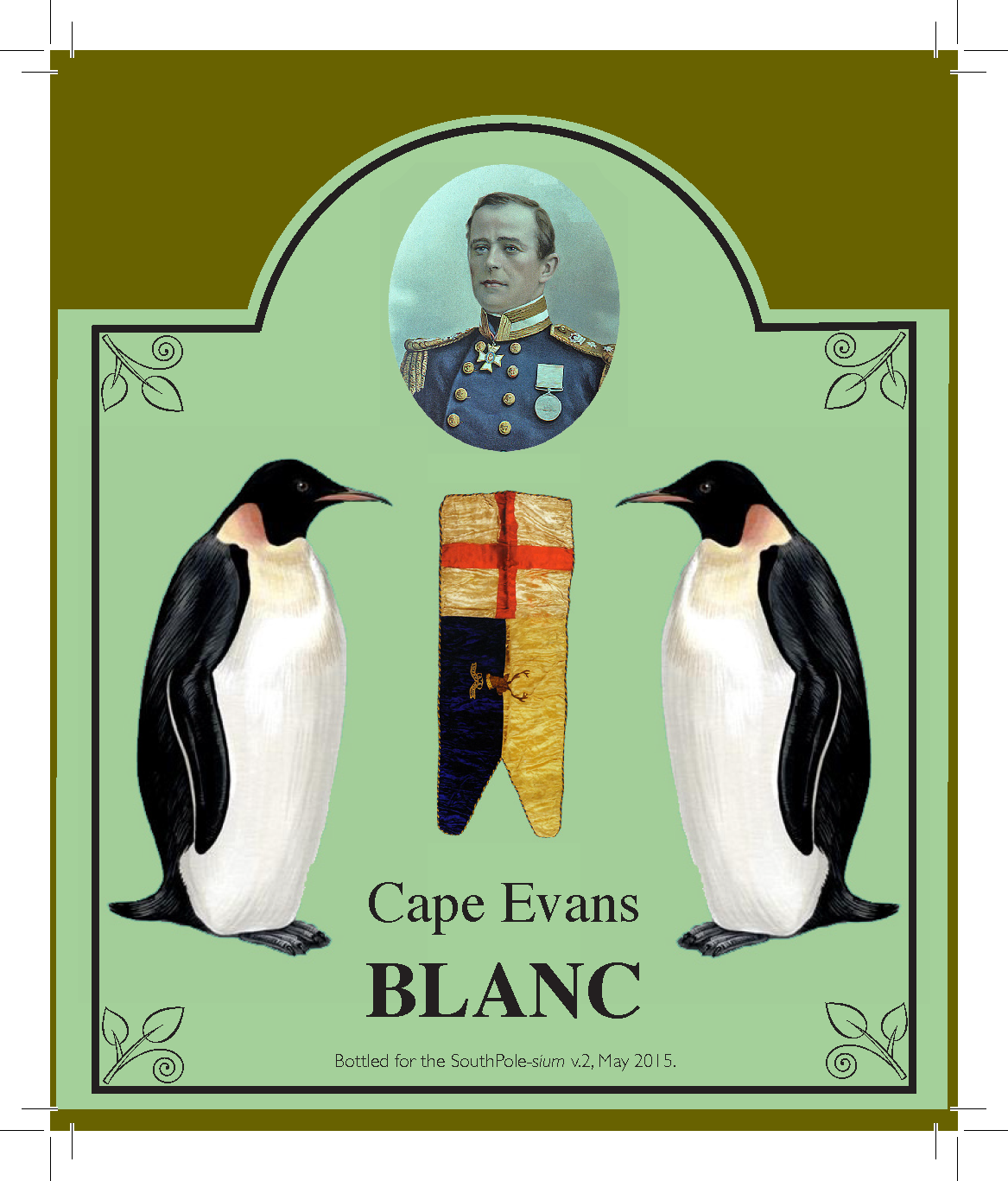
I produced these labels for the SouthPole-sium v.2. You can print them out onto adhesive stock and attach them to wine bottles over the original labels. It works best if the bottles are dry.
Click here for the Label 2: Cape Denison Claret
Click here for the Label 3: Cape Evans Blanc
Click here for the Label 4: Cape Evans Claret
Click here for the Label 5: Framheim Blanc
Click here for the Label 6: Framheim Claret
Click here for the Label 7: Cape Royds Blanc
Click here for the Label 8: Cape Royds Claret
Read about it at http://www.livescience.com/48690-bronze-bell-hms-erebus-shipwreck-photos.html.
After years, decades and indeed over a century or so of speculation, at least one of Franklin's ships has been found in the Canadian Arctic. Read about it at nationalgeorgraphic.com.
The world's premier polar scholarly journal—The Polar Record—is going 100% digital/electronic/web-based, etc. The print version is dead as of the next issue! Apparently the last one that you will actually be able to hold in your hands will be Vol 50, Number 255, October 2014. This is a sad day and I can predict almost with certainty that a hundred years from now my complete run of the journal (Number 1, 1931 ("price 1 shilling") to Number 254, 2014 (price $206 per year) will be easier to access (for my descendants, that is) than 255 issues in some unknown format yet to be invented. (My early volumes—Numbers 1-147, uniformly bound in pale Antarctic blue—were the set of Terence Armstrong who had a long association with SPRI.)
A full scale replica of Mawson's Huts is being built on the Hobart waterfront by the Foundation in partnership with the Australian Geographic Society (see also NEWS).
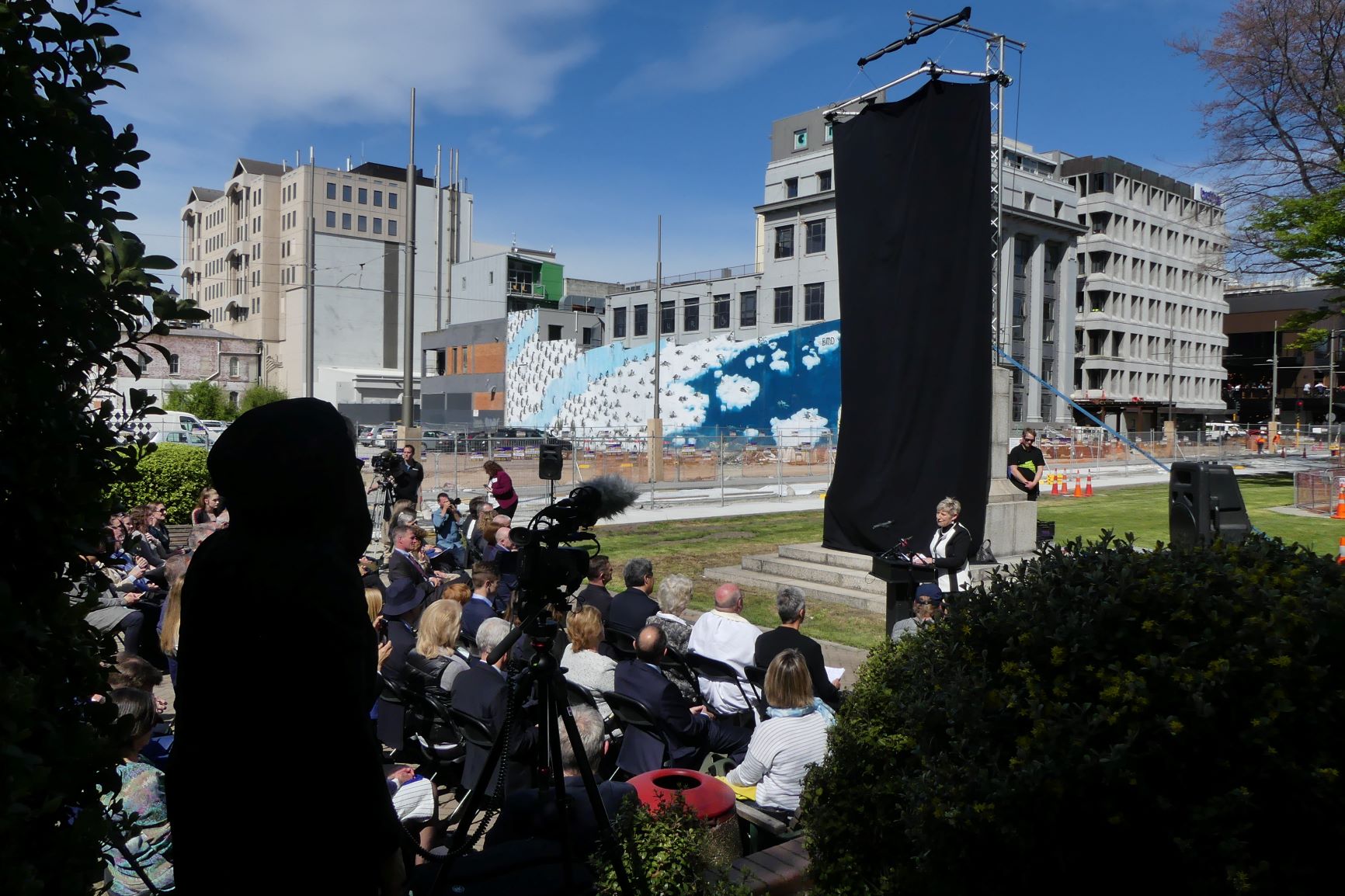
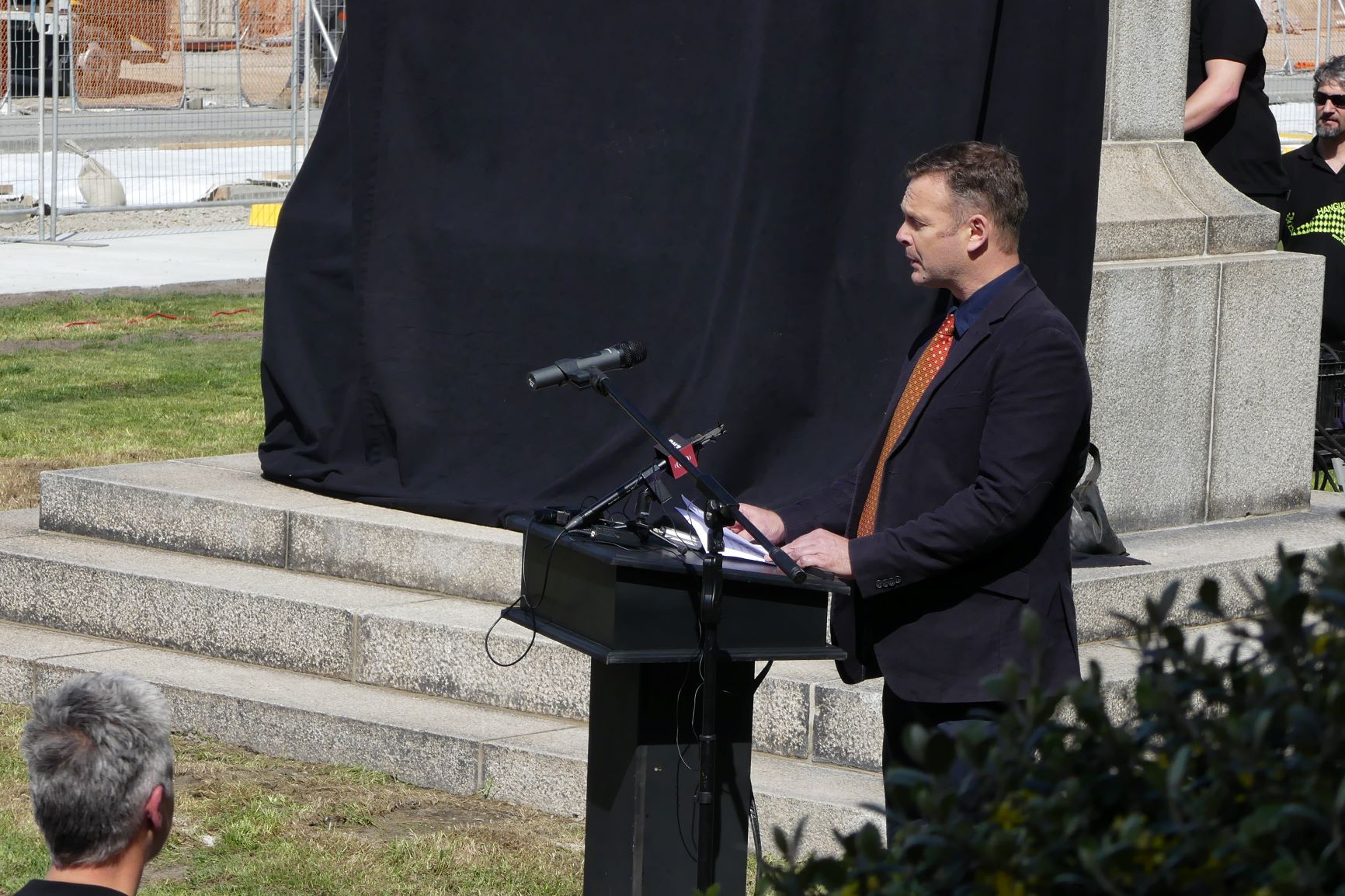
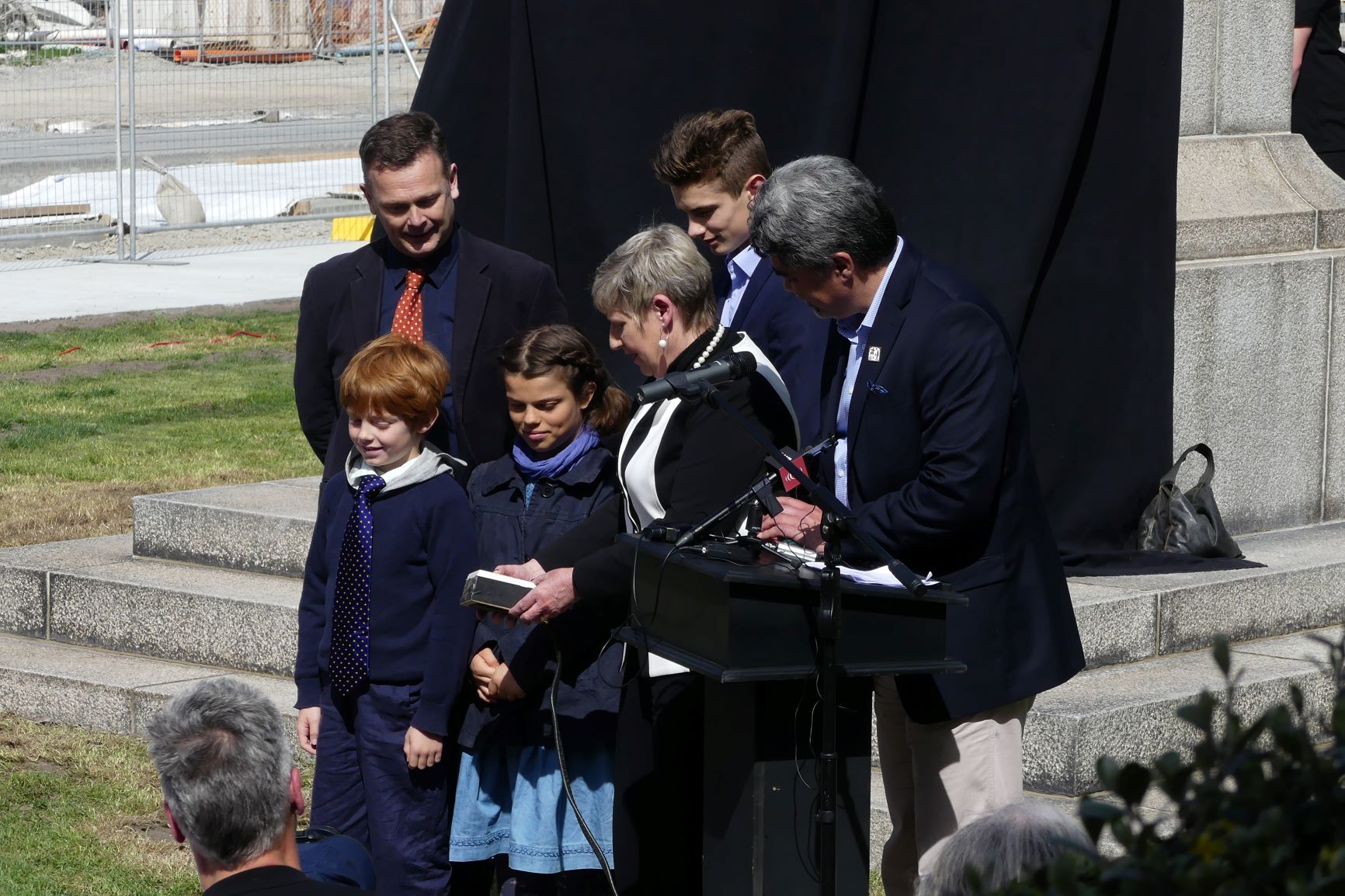
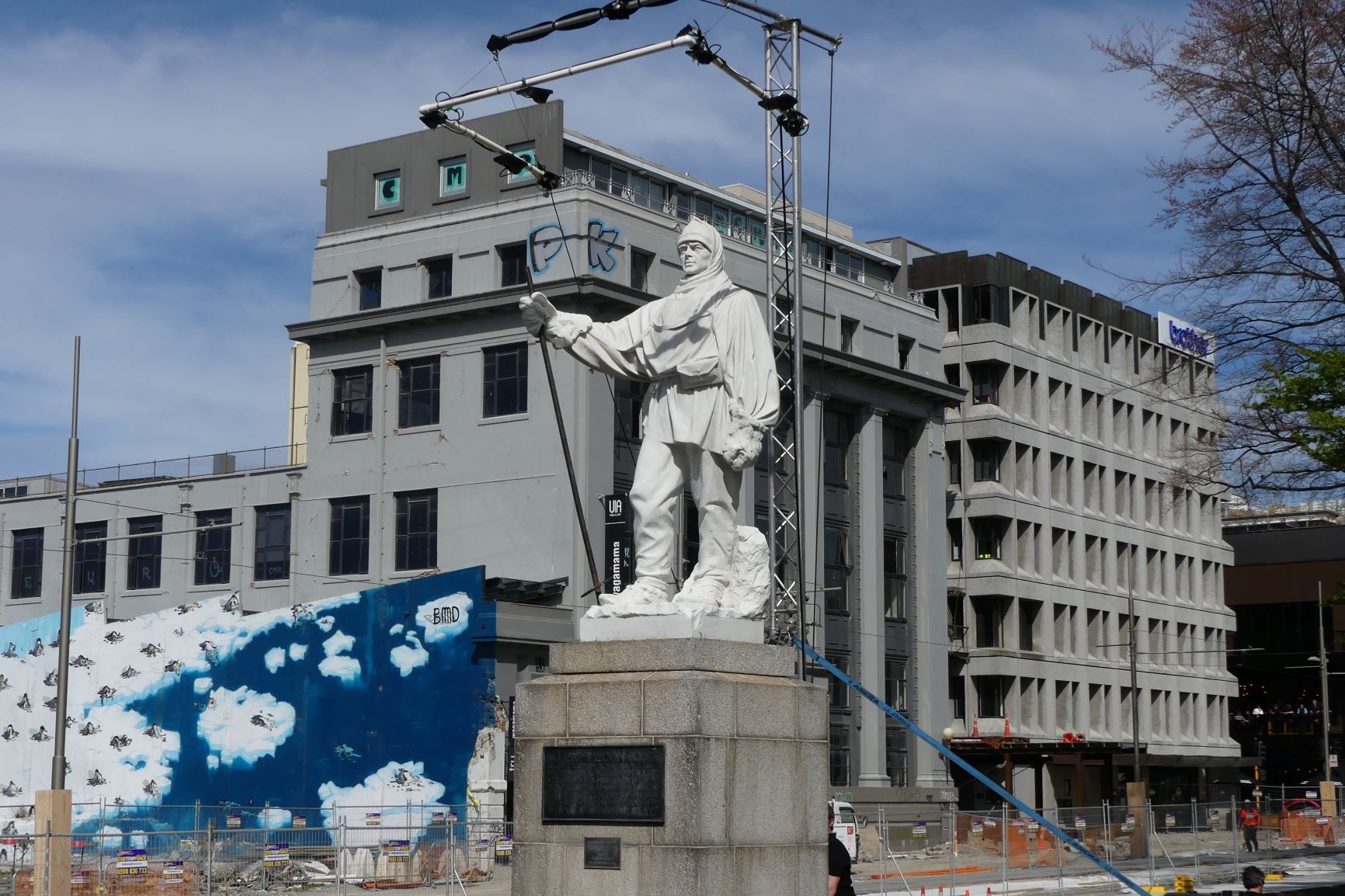
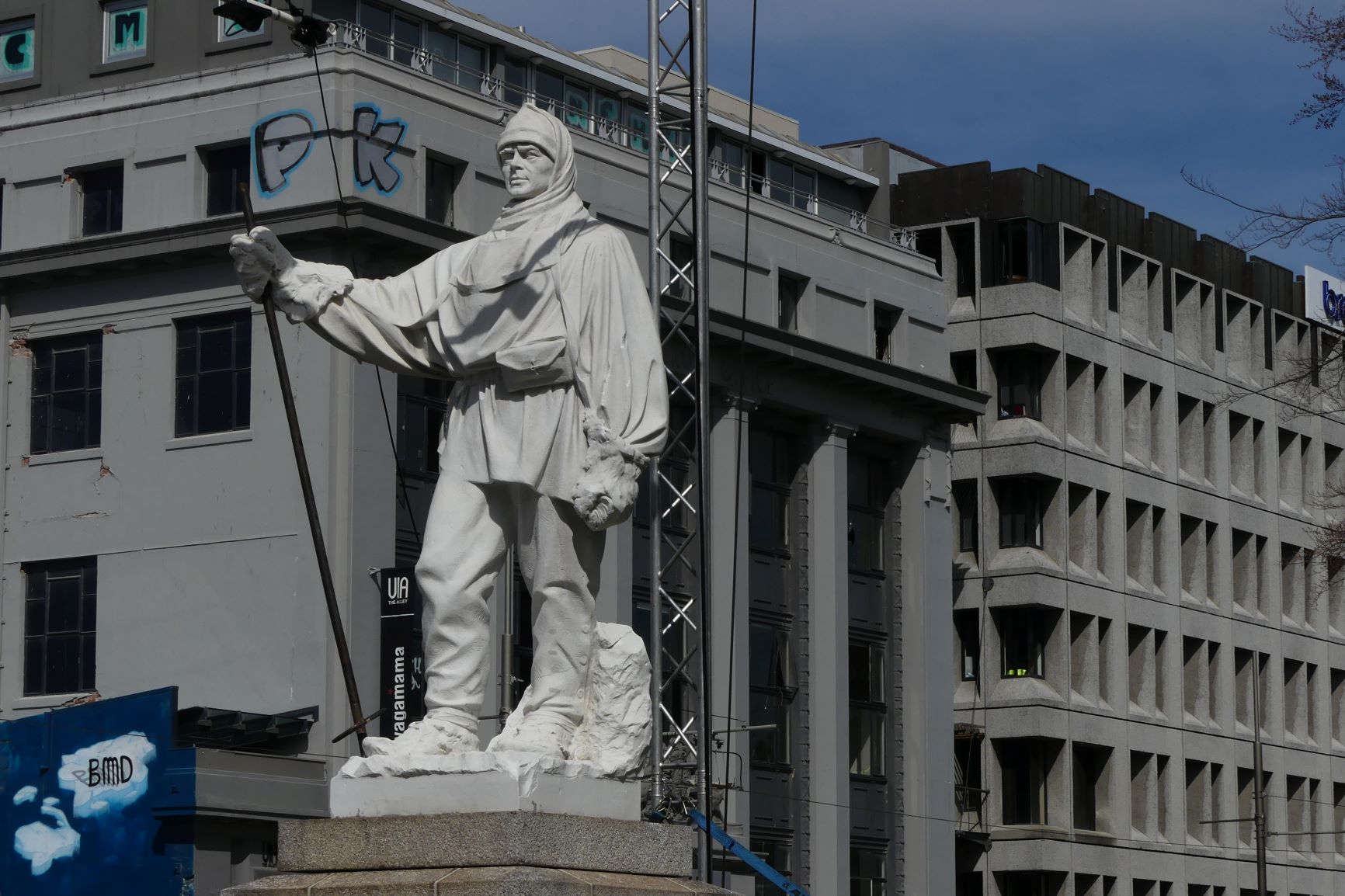
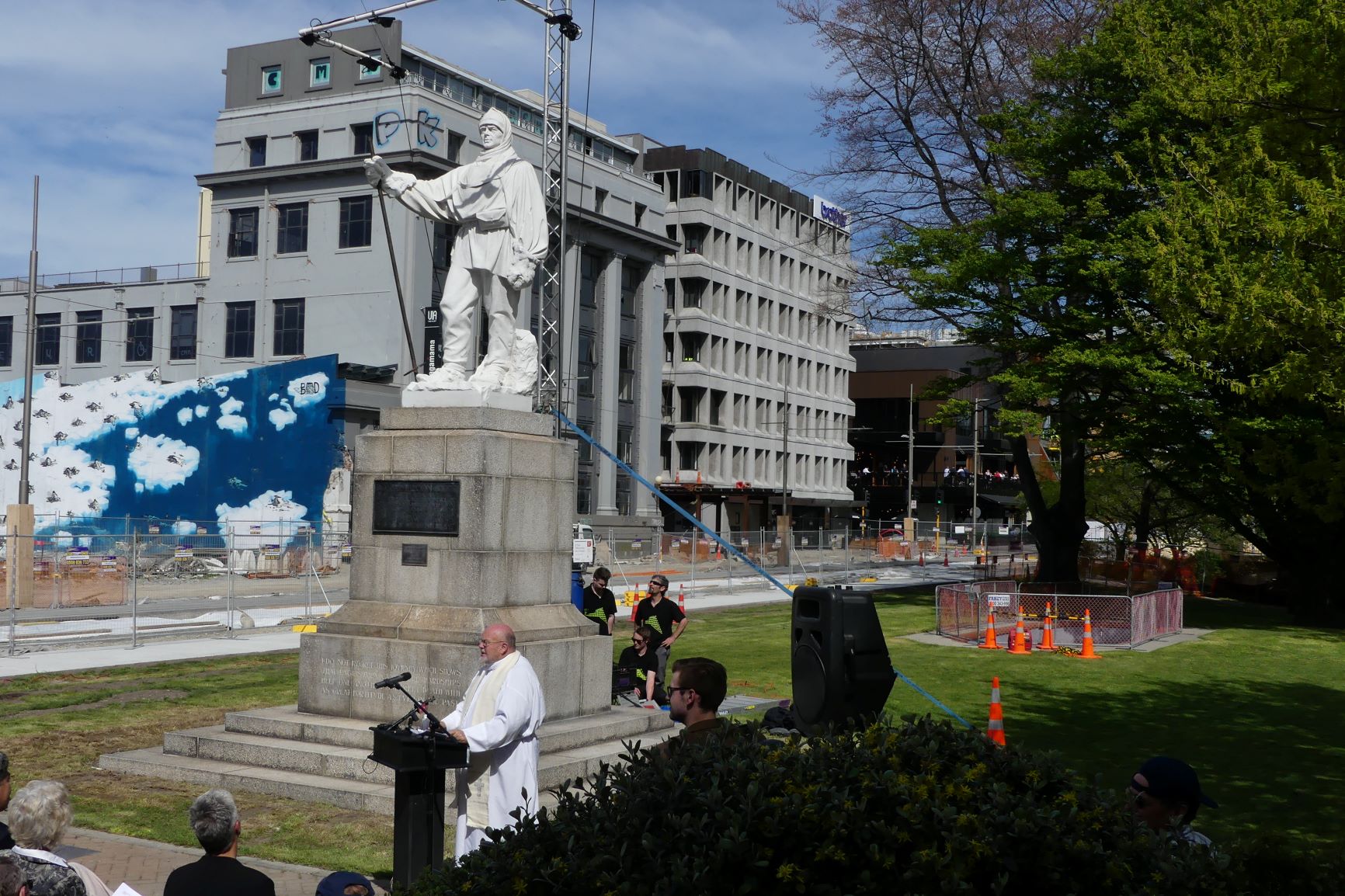
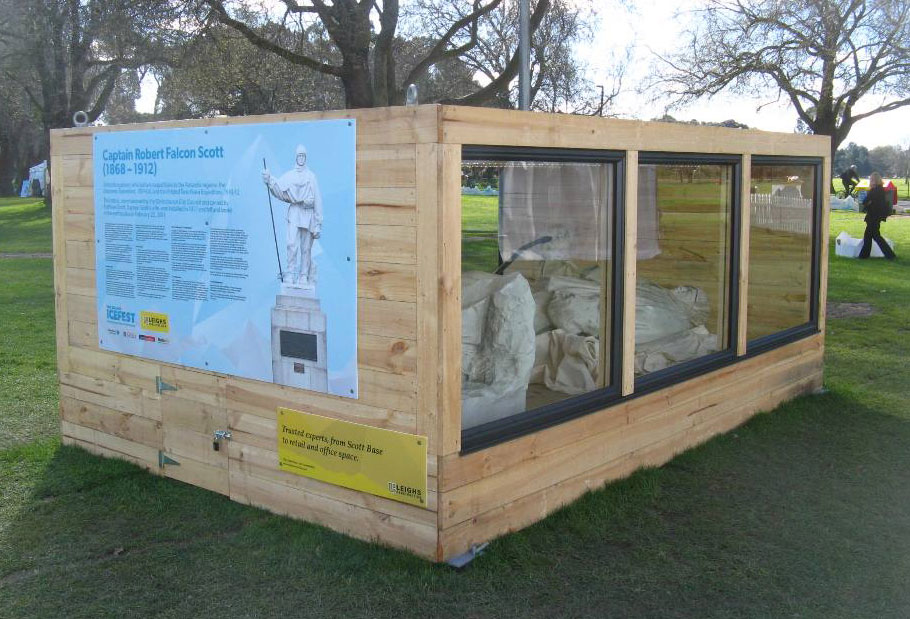
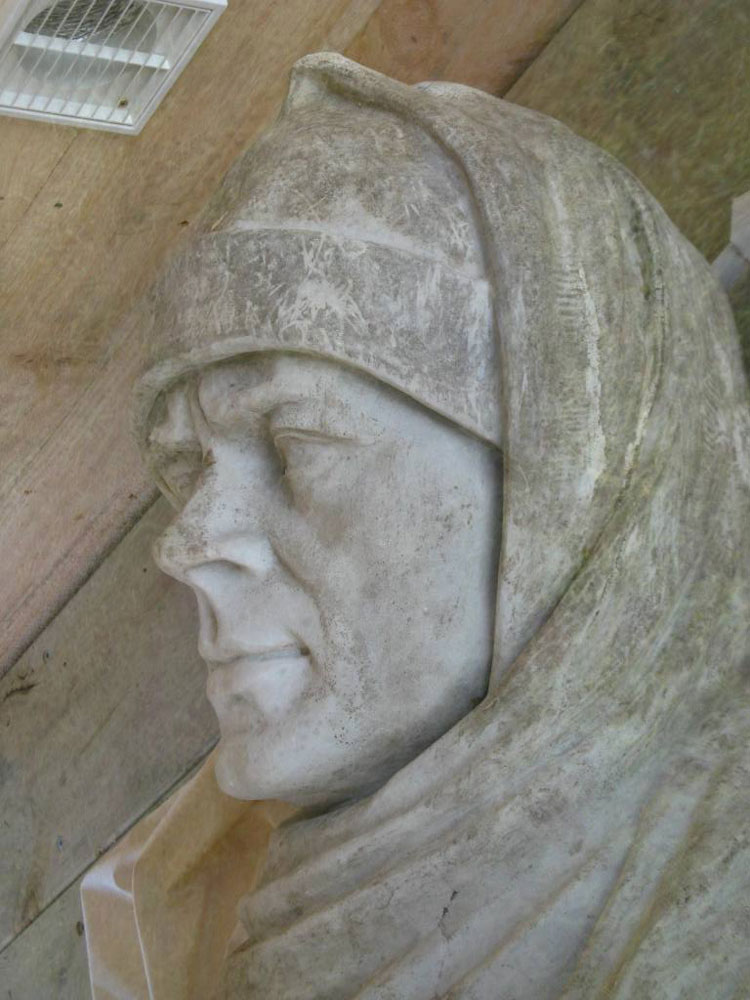
Stephen Hicks has kindly sent on some recent photos of Christchurch's earthquake-damaged statue of Captain Scott. Now on temporary display in Christchurch, it will in time be re-assembled (with steel rods within) and returned to its original location.
Two accounts of the 1820 discovery by Edward Bransfield of the South Shetland Islands appeared in the Edinburgh Philosophical Journal in 1820 and 1821. Source: Scanned by Google.
An e-mail from Glenn Stein set off an interesting quest.
The 22 February 2011 earthquake in New Zealand has had some significant effects on Antarctic sites in and around Christchurch.
Liz Truswell has brought to my attention an ABC radio program she did in Canberra that aired on 6 March 2011. One can hear it or download the transcript (which appears below) from
http://www.abc.net.au/rn/ockhamsrazor/default.htm
A nomination was submitted to the Westminister City Council on 5 February 2012 proposing a Green Plaque for Markham's 21 Eccleston Square house. If approved, it's possible that the plaque will be in place before the end of the Scott centenary year (1912-2012).
—R. Stephenson
Here are several presentations I've prepared for some talks at conferences & meetings and on Antarctic cruise ships:
I came upon these few pages while reading a Christmas gift.
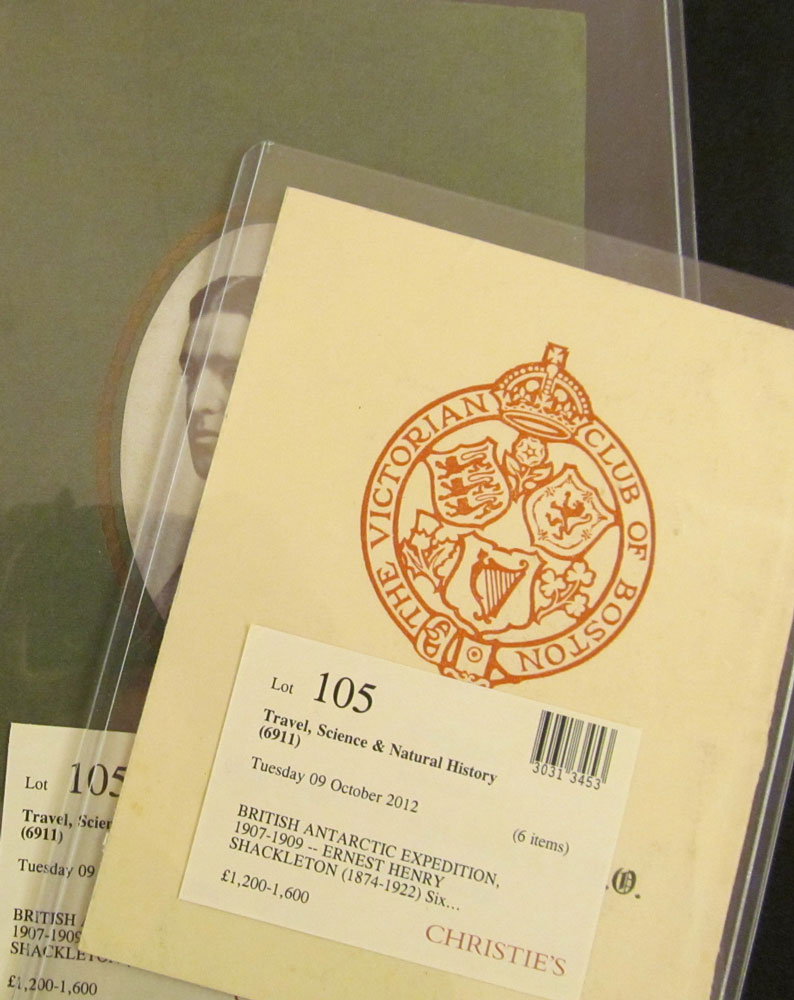
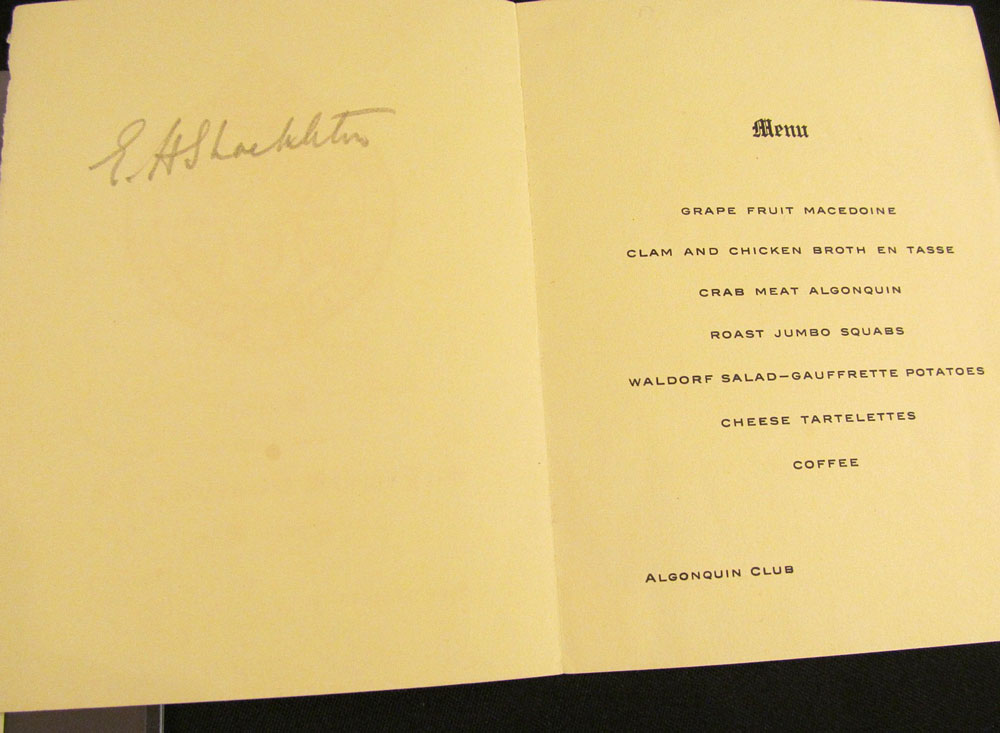
This recounts the visits various Shackletons have made to Boston
This is a talk I gave at Swann Galleries the night before his collection was auctioned in New York on 24 May 2007.
Frank Hill has sent on an interesting excerpt from his dissertation.
Click here to see Ted Stump's photograph of this recently discovered shortcut.
From The New Zealand Herald 02.04.2002
"A diary kept by a member of Captain Scott's expedition to the Antarctic sheds light on the conditions his team encountered during the preparations for their ill-fated journey.
The fragile papers, encrusted in penguin droppings, were discovered yards from Scott's hut, which still stands 90 years after his death. It was the work of an unknown crew member who kept a log of chores performed on Robert Falcon Scott's ship, Terra Nova.
Deciphered by a British student in a New Zealand laboratory, the diary catalogues the hardship experienced by Scott's men as their vessel approached the Antarctic. One diary entry read: "Very little wind, ship still rolling badly. In the dog watch, a lot of washing clothes, officers flitting around in loin cloths doing their own washing, and fishing over the side for specimens."
Experts have no idea of the occupation of the diarist, who used a 1910 magazine produced by the Scottish distillers Dawson's Whisky Company to chronicle day-to-day events such as the dogs dragging the explorers' equipment across the snow.
The diary, which was discovered last summer, has since been held at the Antarctic Heritage Trust in Christchurch.
Kirsten Elliott, a 26-year-old conservation of fine art student at Northumbria University, cleaned the document before stabilising the pages so they could be analysed by historians.
"The diary does start to provide a background from the crew members who went to the Antarctic and the hardships they endured when they went there," she said.
"The magazine was in a terrible state. Seasonal ice melts and re-freezing caused severe damage to the pages ... and the paper was badly cracked and splintered. The magazine had been frozen, buried and covered in penguin droppings for over 80 years.
Scott and four of his men succumbed to starvation and exposure as they returned from the South Pole in 1913."
From a mailing to members dated 18 March 2002:
"As an experimental initiative we hope to launch a journal for articles and reviews of books on matters connected with Shackleton and Antarctic exploration. We have perhaps a surplus of good material for the James Caird Society Newsletter nowadays, many pieces having to be cut in length and the Committee feels that a journal to supplement the Newsletter would allow us to print longer and perhaps more academic pieces.
We intend to print about 150 copies of the Journal for the first issue; these would be issued free of charge to members who fill in and return a slip (which will be sent out when the magazine is published - probably a year from now) asking for a copy. The first to come back to us with a slip would be the first served. To begin with these will be either be collected at our meetings, or sent in return for the cost of postage and packing.
The editor will be the Keeper of the Archives at Dulwich College and our committee member, Dr Jan Piggott, FSA, who organised the Shackleton exhibition at Dulwich last year.
We are very keen to solicit items for publication; please address them to Dr Jan Piggott at the College (The Common Room, Dulwich College, London SE21 7LD) preferably both as 'hard copy' and on disk."
UPDATE: From a recent Society mailing:
The Journal aims to print articles with new material on Shackleton and on Antarctic exploration, together with unfamiliar materials and extracts from out-of-print books or forgotten magazine articles on Shackleton.
The first number will include an article by our Chairman, Major General Patrick Fagan, about an expedition to South Georgia in '64-65, an extract from William Bakewell's autobiography describing the Endurance expedition, an essay by Jan Piggott on Shackleton's reading and his love of quotation as a key to his character and on why Shackleton's own books matter. There will be a brief article on the statue of Shackleton by Charles Sergeant Jagger, and reviews by Ann Shirley, Jan Piggott and Stephen Scott-Fawcett.
The next issue will include an article on Kathleen Shackleton, and it is proposed to introduce a section of Letters, Notes and Queries.
The magazine will be printed in an A4 format, with some black and white photographic illustrations.
The print run will be no more than 150 copies. These will be issued free of charge to members who apply for a copy on the slip below. Postage inland and by surface mail overseas will also be free to members. The copies will be issued on a 'first come, first served' principle. Members who attend the James Caird Society meeting on May 9th and who wish for a copy are asked to collect them on the night to save postage. However, no copies will be issued to members on that night from whom we have not received the slip below requesting a copy.
We have a file of e-mail and of conventional letters requesting a copy of the new journal from the time of our first announcement, which we will honour. If members cannot remember if they asked for a copy at that time or wish to be sure that their name is in that file, we recommend that they now also return this slip in any case."
For further details, contact:
SPRI is the pre-eminent institution of its kind in the world. Many people reading this will have had the pleasure of visiting SPRI, making use of its collections and benefiting from the friendly assistance of its staff.
A mailing was recently received announcing an Appeal for funds. Included below is the cover letter from Keith Richards, The Director, and most of the text from the handsome Appeal packet.
Since its foundation the Scott Polar Research Institute has accumulated an unrivalled collection of archival materials and artefacts relating to the cultural and scientific heritage of polar exploration, and has built an outstanding Library. These are resources of global significance and serious investment is necessary to take full advantage of such riches.
The first phase in this investment was the raising of £1.5m to fund the building of the Shackleton Memorial Library extension, which includes the new Tom Manning Archive. The second, ongoing phase is outlined in this brochure. Its aim is to raise £3.5m for a Scott Polar Research Institute Fund. This will support projects to allow us to develop the Archive, Museum and Library into an integrated information resource. The aim is for this to be available to all, from those of the public with a general interest in polar matters, to scholars engaged in polar research.
The projects are outlined in this brochure. They include:
The first phase of this investment in the Institute's future was a great success. We are sure that you will agree that the enclosed brochure outlines an exciting vision for the Institute's role in the world, and that you will want to join us in making this second phase an equally successful venture. There are many ways in which this might be feasible, and details on how to make a donation are provided on an insert in this brochure. However, even ideas, contact names, and the investment of your time could be helpful to us! We plan to recognise major donations by appropriately naming sponsored areas, projects, and posts.
We look forward to working with you to make this initiative the success it deserves to be, and hope that you will consider assisting the Institute to achieve these exciting goals.
As ever, your support is greatly appreciated,
Professor Keith Richards, Director
GLOBAL CHANGE, GLOBAL INFORMATION, GLOBAL ACCESS
The Scott Polar Research Institute Fund will enable us to fulfil our vision of developing global access to the Library, Archive and Museum resources of the Institute. We need to raise £3.5m in order to:
We will all benefit. The polar regions are crucial for our future welfare, and information and knowledge about them must be widely available to all. The Institute can help scientists, explorers, governments, industries, polar inhabitants, even armchair travellers; indeed, anyone with a desire to know more about the Arctic or Antarctic.
Scientific knowledge of continental Antarctica effectively began with the expeditions of Captain Scott. Sir Ernest Shackleton set an example for leadership in adversity which business leaders today are trained to emulate. These men inspired the Institute's foundation and development.
It is to safeguard and enhance knowledge based on their achievements and those of the scientists and explorers who followed them, that we now launch the Scott Polar Research Institute Fund.
The projects outlined in this brochure can be supported at a number of levels. A donation of £5,000 would help enhance the museum; one of £15,000 would enable us to employ a qualified bibliographer for a year; £35,000 would support an archivist for a year; while sums of £500,000 to £1,000,000 would endow named posts or locations within the Institute. Whatever the gift, it will help us make our vision a reality.
The Scott Polar Research Institute Fund will support three projects to sustain the Library, Archives and Museum as new material is acquired, new technologies are introduced, and new means of providing information to scholars and the general public become available. Over the years, such development of the Institute's information services has been hampered by uncertain funding. The Fund will ensure that staff can meet the growing and changing external demands for research and information, well into the future.
The Archives provide an outstanding resource for scholars throughout the world to research the early polar expeditions, the development of scientific research in Antarctica and the Arctic, and geo-political and commercial interests in these regions. The Archive Project will:
One of the Library's greatest strengths is its ability to collect and process information in many languages; seventy-two are currently represented in the collection. This is only possible if its staff have high-level bibliographic and language skills. The Institute is dedicated to making information globally available, and maintains a website which attracts approaching 200,000 hits from all around the world, every month. The Library Project seeks to build on and develop these resources in an expanding suite of subject-specific and regional directories and databases, and also through extension of its publication programme. The Library Project will:
The Museum Project aims to modernise the Institute's Museum for the educational benefit of a wider public. It holds excellent collections related to the Heroic Age of polar exploration, including much material that at present cannot readily be displayed. The Museum Project will:
The Institute was established in 1920 as a memorial to Captain Scott and his colleagues, to collect information about the Arctic and Antarctic, and as a place for scientists and polar explorers to meet for the furtherance of knowledge. The Institute has magnificent premises in Cambridge. In addition to teaching and research facilities, these accommodate a museum, lecture theatre, archives and library in buildings originally opened in 1934 and significantly enlarged in 1968, thanks to a substantial grant from the Ford Foundation.
In the 1990s, a development programme was initiated to strengthen the Institute for the new century. This began with a highly successful campaign which raised £I.5m to build the Shackleton Memorial Library, an award-winning extension providing purpose-built accommodation for the library, archives, photographic and map collections. This brochure outlines the next phase in this programme, to create a Scott Polar Research Institute Fund which will support global access to the Institute's incomparable resource of historic and contemporary information about the polar regions.
The University of Cambridge: The Institute benefits greatly from being embedded in one of the world's finest Universities. The Institute's academic staff undertake pioneering studies in a broad range of subjects, from glaciology, sea ice, and climate change, through remote sensing of environmental pollution, to social and cultural change in Arctic peoples. The Institute offers a unique Masters course in Polar Studies, and its staff contribute to other degree courses offered elsewhere in the University.
The international mission: The founding vision of the Institute was that it should provide a focus of polar information and expertise for all--for scientists, scholars, explorers and peoples of all nations. This vision is in the hands of the Library (the world's finest for the polar regions), the magnificent Archives, and the small but choice Museum. To meet burgeoning public interest in the polar regions, we need to exploit opportunities presented by evolving information technology, to disseminate knowledge and use of the Institute's unrivalled resources while maintaining the original vision. This is where the Scott Polar Research Institute Fund comes in.
Professor K. S. Richards, The Director
NOTE: The insert mentioned above gives information that will be of interest to donors in the US. Tax-deductible gifts may be made to:
The following appeared in the April 2001 issue of "Members' Newsletter" of the Australian Geographic Society:
The life of one of Australia's greatest adventurers, Sir Hubert Wilkins, will be celebrated at a special event in the South Australian outback in April...
The Society began campaigning for the recognition of Sir Hubert--explorer, polar aviator, cinematographer and naturalist--after our founder Dick Smith flew over the stone farmhouse of his boyhood hero in 1994 and was distressed by its poor state. With the support of our enthusiastic members, who've donated thousands of dollars, and a group of dedicated locals, Sir Hubert's family home has now been authentically transformed from a crumbling ruin into a handsome memorial...
A weekend of celebrations begins in Hallett Town Hall on Saturday 28 April, with the world premiere of Searching for Sir Hubert, an exciting documentary of Sir Hubert's life, which includes rare footage shot by Sir Hubert himself. Much of the material is being shown publicly for the first time. Filmgoers will also get the chance to take part in a question-and-answer session with producer John Hipwell...
The following day, Dick Smith will officially open the restored house at 2.30 p.m. You'll be able to wander through the six rooms of the farmhouse where Sir Hubert spent his early life. The youngest of 13 children, he walked 10 kilometres to attend the local school, while also helping out on the farm. Here he witnessed the devastating droughts that motivated his life's work.
Hundreds of Society members from around the country. descended on a paddock in the South Australian outback in April to celebrate the life of one of Australia's greatest adventurers - Sir Hubert Wilkins. After years of fundraising by the Australian Geographic Society, and years of work by a committee of local people, Sir Hubert's restored family homestead was officially opened as a memorial on 29 April.
"We hope that this memorial to Sir Hubert will help inspire Australian adventurers for generations to come," Australian Geographic director Howard Whelan told the enthusiastic crowd at Mt Bryan East, 13 kilometres east of the town of Hallett, in SA's Mid-North. Australian Geographic Society chairman Dick Smith praised Sir Hubert's many achievements, and acknowledged the generosity of Society members, whose contributions made the restoration work possible. "At last, Sir Hubert is beginning to receive the recognition he deserves in the country of his birth," Dick said.
Among many other achievements, Sir Hubert captured the first-known film of battle during the Balkans War in 1912; covered World War I Western Front battles and was awarded the Military Cross and Bar for bravery in 1917-18; was the naturalist on Shackleton's last Antarctic expedition in 1921-22; made the first trans-Arctic flight in 1928; made the first under-ice voyage by submarine in the Arctic Ocean in 1931 and was the manager of four Antarctic expeditions, reaffirming some Australian Antarctic claims in 1933-39.
A replica of Sir Charles Kingsford Smith's Southern Cross--the Fokker monoplane sold to him by Sir Hubert--circled overhead, enthralling the crowd. They cheered and waved as the plane passed over the homestead several times, before dipping its wings in farewell and heading back to Adelaide. Dick then declared the homestead open, and invited everyone to look inside. The homestead was painstakingly restored by builder Neil Schiller, from the nearby town of Burra, using only authentic materials.
The Clare Valley Concert Band provided entertainment while a steady supply of freshly baked scones and refreshments continued throughout the afternoon. Members got the chance to hear about Sir Hubert first hand from many of his descendants, who'd travelled from around Australia for the event. The evening before they'd helped swell Hallett town hall beyond capacity for the first public screening of Ice Maverick, a documentary on Sir Hubert's life by Melbourne filmmaker John Hipwell.
Set in rolling hills about 180 km north of Adelaide, the homestead is an evocative reminder of Sir Hubert's modest beginnings. Members can experience the homestead for themselves by collecting keys from Hallett's Wildongoleechie Hotel.
The Newsletter is on the Society's website at www.australiangeographic.com.au
Thanks to Gordon Bain in Hobart for sending on the newsletters.
Celtic Originals, located on the Isle of Mull, has recently designed and produced the Antarctic Tartan. As all profits are earmarked for Antarctic causes we're happily including information. Here is a portion of the press release of last year.
Although remote and inhospitable, Antarctica is a key part of our world and a magnet for explorers and scientists. Now for the first time its beauty is depicted in a fabric. The Antarctic tartan symbolises Antarctica, the vast continent that surrounds the South Pole and is encircled by the Southern Ocean. All the colours used are the colours of the animals, plants, rocks and waters of this remarkable continent whilst the design itself mimics the geography.
Celtic Originals (a small tartan business on the Isle of Mull) wanted to provide those who visit the Antarctic with more than just memories whilst also benefiting conservation activities there. The British Antarctic Survey were approached for their approval to create an Antarctic tartan which could raise funds to help protect the Antarctic environment. In agreeing to help BAS suggested The UK Antarctic Heritage Trust as the charity most deserving of support. BAS photographer Chris Gilbert took photos of scientist Keith Reid wearing the Antarctic tartan shirt on Bird Island earlier this year.
In supporting this development BAS has said: "The British Antarctic Survey have welcomed this initiative in providing a different and artistic interpretation of the beauties of the Antarctic. We believe that the generous gift of profits from this enterprise could materially help in the conservation of our Antarctic heritage sites."
The Antarctic tartan perfectly symbolises Antarctica. Inspiration for the design of the tartan setts was taken from the geography of the continent, whilst the vibrant colours are those to be seen in the wildlife and rocks. The designer matched the colours from Ben Osborne's photographs of the Antarctic from Alistair Fothergill's BBC book Life in the Freezer; A Natural History of the Antarctic. Its cover picture of two King penguins was the initial inspiration.
The UK Antarctic Heritage Trust is a charity that works to safeguard Antarctica for future generations. In particular it restores and manages historic sites in the Antarctic from where, during the last hundred years, British explorers and scientists made many of their most significant journeys. The chairman of The UK Antarctic Heritage Trust is Dr John Heap.
The design is based upon the Antarctic's geography. The large square of white at the centre of the sett represents the light of Antarctic summer on the ice-covered continent. This is quartered by threads of pale blue. These represent the zero/360, 90, 180, and 270 lines of longitude. The point where they cross represents the South Pole. Two bands of grey surrounding this white heart depict nunataks, mountain ranges, and exposed coastal rocks. Around the coast Antarctica's life forms are found so the colours that follow in the sett, orange, yellow, black and white, represent the wealth of animal life on land and in the seas. Orange also represents the lichens that encrust the rocks. Surrounding the land pale blue and white depict the ice shelves whilst the outside is edged by thick bands of midnight blue for the ocean deeps and the dark winters. Each sett is separated by a thin band of white that represents the edge of Antarctica. Where these cross, the Southern Cross is depicted. This viewed diagonally also represents the Scottish saltire, - tribute to the fact that 2001 is the centenary of the first Scottish Polar expedition to the Antarctic."
Items featuring the Antarctic tartan are available at Dundee's Discovery Point and the National Maritime Museum at Greenwich.
Celtic Originals has a website
http://www.celtictartans.com
through which items may be viewed and purchased. [This website appears to be shut down.]
The latest "Polar Bytes" (January 2001, No 17), the newsletter of the Friends of the Scott Polar Research Institute, carried this interesting notice:
"Those of you who have visited the wonderful exhibitions South: The Race to the Pole at the National Maritime Museum and Shackleton at Dulwich College, may have considered just how much more wonderful still it would be if a means could be found to bring together permanently all artifacts associated with the great expeditions of the Heroic Era of Antarctic Exploration. This is the dream of the Antarctic Virtual Museum, and the advent of the Internet makes it a practicable possibility. The aim of our project is to bring together on the Institute's website, images of all artifacts - including equipment, paintings, photographs, and, in time, even-diaries, associated with or resulting from the Heroic Era expeditions. The images would be accompanied by annotations describing the objects shown and linked to other relevant images and sources of information. What a wonderful resource this would be for schools, and how fascinating for all those interested in Antarctica!
Needless to say, this is a very ambitious project and one which will take substantial work and funding. Already, however, a start has been made. Friends attending last year's Lunch at Girton College may recall John Heap's announcement of a grant to the project from the U K Antarctic Heritage Trust. Thanks to this, we have managed to photograph a good proportion of the Institute's own collections and to word-process much of the Museum card catalogue as an initial source for the annotations to accompany the images. Much, much more remains to be done. Items in other public collections must be identified and photographed; and contact made with individuals owning Heroic Era artifacts, many of which remain in private ownership. Only for publicly-owned artifacts will locations be given of where the originals are located; privately-owned items will simply be recorded as 'In private ownership'. We don't wish to encourage the wrong kind of interest! Much more too needs to be done before the Institute's own holdings can be displayed: the entire collection of relevant items must be digitally photographed, not too great a task perhaps for equipment, clothing, etc., but vast when one considers photographs and paintings. The Institute has nearly 1,000 paintings and drawings by Edward Wilson alone, and how much should we like to be able to display these to all by means of the Internet!
If this is a project which catches your imagination, or in which you think you might be able to help, please contact William Mills, Keeper and Librarian. We are not just looking for funding, though this is always essential. If you know of relevant artifacts, please tell us, since it is more than likely that we will not know already. If you have suggestions to offer, relevant experience, or just spare time, all will gratefully be appreciated. William may be contacted by phone on 01223-336557, email at wjml3@cam.ac.uk or by post to the Institute."
Note: William Mills reports that "As yet, there is no official
announcement or press release since the project is in its earliest stages," but he encourages those who are able to assist in this undertaking by supplying information or describing their own collections, to contact him.
Before Scott's Discovery sailed for the Antarctic, "Ninety-two teeth were removed . . . and 170 holes filled at a cost of £62.45." Also before sailing 32 stray East End cats were found on board and dispatched. (Ranulph Fiennes, Captain Scott, p 41)
Charlie Bevilacqua, a Seabee Chief who was in charge of building the first South Pole Station (1957-58), made the first "pole," the barber pole marking 90 degrees south. The symbolic pole today is red and white but the first pole was orange and black. Why those colors? Charlie grew up in Woburn, Massachusetts, and chose orange and black, the Woburn High School colors. Charlie told me this pole is in a New Zealand museum, probably the Canterbury Museum in Christchurch.
An interesting article by Julian Champkin appeared in the Daily Mail (UK) of February 5, 2000. The headline reads: "Secrets of the Lost Wallet." the piece begins: "Late last year, a green leather wallet was found in a wooden shack in the frozen wastes of Antarctica, nearly a century on from the day its brave owner lost it." The "wooden shack" was Scott's Cape Evans Hut, and the wallet belonged to the Rev. Arnold Patrick Spencer-Smith, one of three members of Shackleton's Ross Sea Party to perish (he died of scurvy on March 9, 1916. The lengthy (for the Mail) article has extensive detail about Spencer-Smith, his companions and the harrowing privations they faced in their successful although in the end wasted efforts to position depots for Shackleton's Weddell Sea Party.
The article gives no details on the circumstances surrounding the wallet's discovery. Possibly it was found by a work party of New Zealand's Antarctic Heritage Trust. Champkin does relate that the only contents of the wallet were a Cape Town tram ticket, a Sydney ferry ticket and five photographs.
--Thanks to John A. Stansfield
Dumont d'Urville was a proponent of phrenology to such an extent that he appointed Pierre Dumoutier as Antarctica's first "cranioscopist" aboard the Astrolabe during the great French expedition of 1837-40. In his will d'Urville directed that his head be preserved for future phrenological study. When d'Urville and his family were tragically killed in a railroad accident in 1842, the Admiral was identified by the size and shape of his charred head.
In February 1842, during Ross's voyage, the first fish caught below the Antarctic Circle was landed on the Terror. It was frozen into ice that had been chipped from the ship's bow. John Robertson, the surgeon, took the six-inch long fish--which he named Pagetodes (frozen solid in Greek)--below and placed it on a plate to thaw. The ship's cat found it and made a meal of it.
Edith "Jackie" Ronne mentioned recently to me that the Ronne family is now fourth generation Antarctican: Martin Rønne (1861-1932) who was with Amundsen as a sailmaker and with Byrd as a ski instructor, ice-pilot and dog driver; his son, Finn Ronne (1898-1980) who was with Byrd in 1933-35, the first of his nine Antarctic outings; his daughter Karen Ronne Tupek; and her two children.
The first time the word 'penguin' was used to describe the southern bird occurred during the 1586-88 third circumnavigation of the world by Thomas Cavendish in the 'Desire.' Source: Gurney, Alan. 'Below the Convergence; Voyages toward Antarctica 1699-1839,' p. 63.
Louis Bernacchi records in his book Saga of the "Discovery" (London: Blackie & Son, Ltd., 1938, p. 51) perhaps the first surgery performed in the Antarctic:
Some Polar Wine Labels
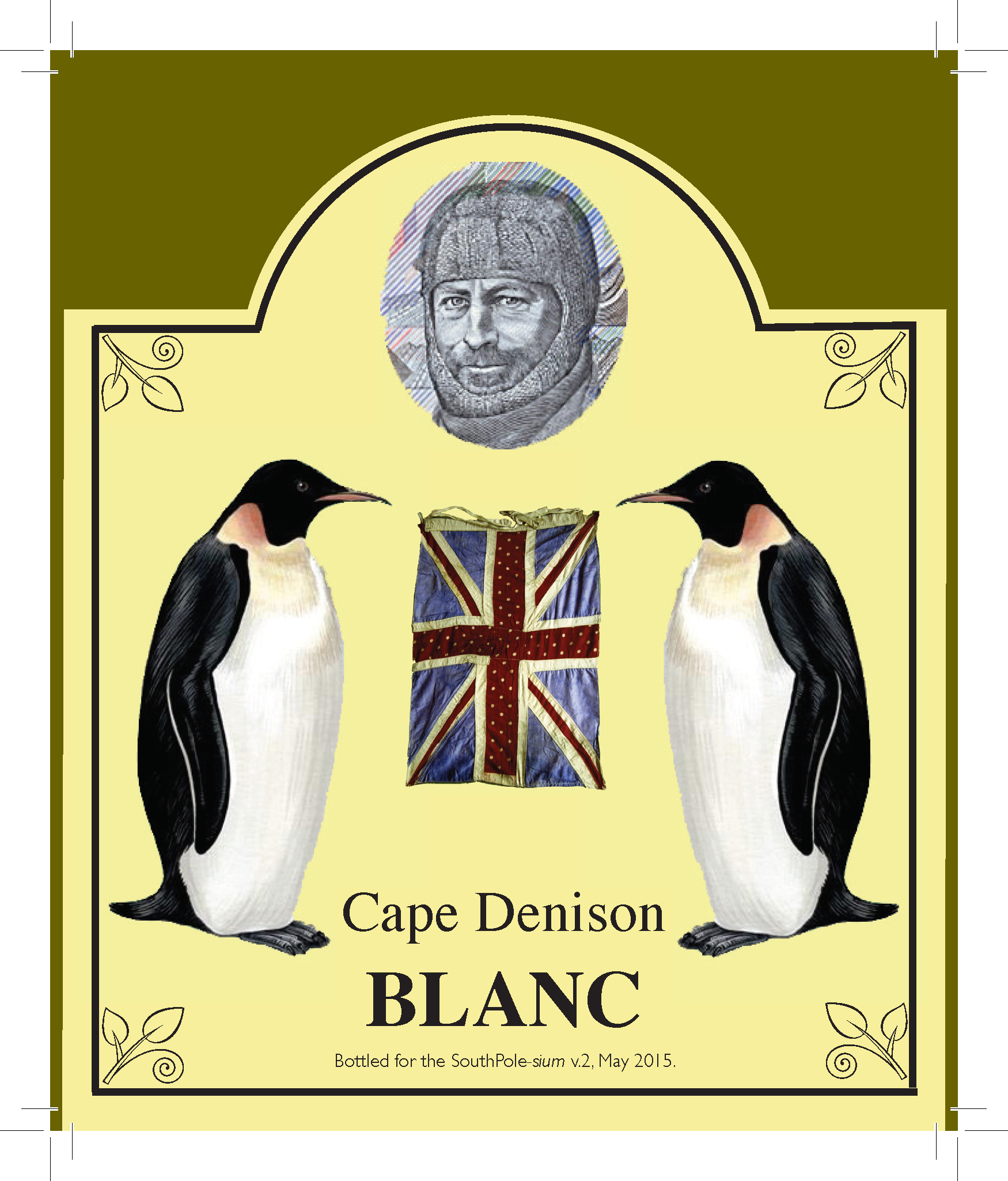


Click here for the Label 1: Cape Denison Blanc
Bell from the Erebus recovered

Photo: Parks Canada
—Thanks again to Shane Murphy.
(11 November 2014)
Franklin's Erebus (or Terror) Found!
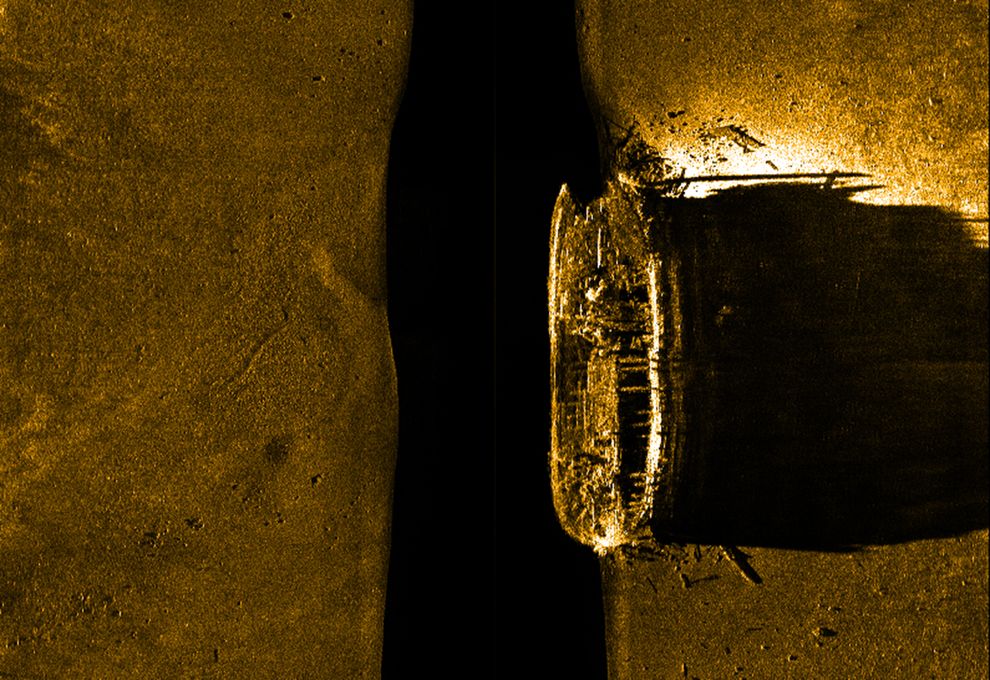
Photo: Parks Canada via EPA
Why are we including this Arctic news? Before going off to seek the Northwest Passage with Sir John Franklin, these ships headed south with Sir James Clark Ross.
—Thanks to Shane Murphy.
(20 September 2014)
The Polar Record succumbs!
—R. Stephenson
(10 September 2014)
Participate in a Survey on Antarctic Tourism
"I am a postgraduate student pursuing a Masters degree with the Hospitality, Leisure and Tourism department of the Business School at Oxford Brookes University, UK. The course requires students to undertake a Masters dissertation from a topic of their choice and I have chosen to explore the environmental sustainability of Antarctic Tourism. As an Antarctic conservation and information membership organisation, The Antarctic Circle and your members who receive information from you will understand how important it is for tourism to grow without harming the Antarctic environment. My thesis explores the chance of sustainable tourism in Antarctica also focusing on the educational resources that could be introduced to achieve this.
To expand my research I hope to investigate tourists' motivations and influences behind Antarctic travel. Therefore, it would be greatly appreciated if you could send these questionnaires to all appropriate members. As an organisation with many links to Antarctic companies and resources, I would also be very grateful if you could direct my research data collection to other people that could also help. This includes a broad range of 'tourists' including explorers, adventure seekers and teachers. Previews of these questionnaires have been attached to this email. The first attachment is for members who have not visited Antarctica before, but have booked travel to go and the second link is for those who have already been to Antarctica. It will only take a few minutes for them to complete this questionnaire and all answers will be confidential.
Both surveys seek to determine what factors influence tourist expectations in their visit to Antarctica. It will also investigate tourist motivations and decision planning leading up to the visit. The post visit questionnaire will also focus more on the outcomes of the educational experiences on the Antarctic trip. The results to this questionnaire will highlight the needs of tourists for future travel planning and will also contribute to the future protection of Antarctica.
I thank you for reading this email and I hope that you will be encouraged to send this questionnaire to appropriate members. Please reply to this email for the website links to the questionnaires and any other resources that you may think would help with my research.
I look forward to your reply."
Pre-visit survey
Post-visit survey
(20 August 2014)
Replica of Mawson's Huts
When completed it will operate as a specialist museum commemorating the dedication, spirit of adventure and curiosity of the 1911-14 Australasian Antarctic Expedition (AAE) which Douglas Mawson led as a 29 year old geologist.
It will provide Hobart, Tasmania and Australia with a major new tourist attraction on land generously provided by the Hobart City Council, just 200 metres from where the AAE departed on the ship Aurora on December 2 1911.
Revenue from the replica will be used to cover operating costs and for the ongoing conservation and maintenance of the historic huts at Cape Denison which since being saved from imploding by the Foundation in partnership with the Australian Antarctic Division,Êhave become a major attraction for Antarctic tourists. This will include funding for the Foundation's Secretariat and hopefully over time also provide contributions to the work of other Australian scientists, conservationists and adventurers.
The replica is being built at the University of Tasmania's Launceston campus for Architecture and Design by a team of heritage carpenters who have worked on the actual huts at Cape Denison and assisted by students. It will then be transported by road to Hobart in four parts where the interior will be fitted out to replicate Mawson's Huts as they were when occupied by the AAE in 1912-13.
Source: unknown.
Scott-in-a-box
Stephen Hicks has again kindly sent on some photos of the Scott statue. Scott is now out of the box, restored and back on his plinth!


Two contemporary accounts on the discovery of the South Shetland Islands
Scott's dates
The Christchurch Earthquake
Antarctica, Glossopteris and the Sexual Revolution
Robyn Williams: It was at a dinner, in Canberra, late last year. Put on by the Independent Scholars. That's where I met Liz Truswell, Fellow of the Australian Academy of Science, and she's also a Visiting Fellow at the Department of Earth Sciences at the ANU.
She told me a story, a remarkable story I found so intriguing and unexpected I thought you'd like to hear it. It's about two legends of the 20th century and their unlikely encounter. It's about a tragedy, death and procreation.
Liz Truswell: The story of Robert Falcon Scott's ill-fated expedition to the South Pole has become one of the best-known feats of heroism in the 20th century. Scott and his companions reached the South Pole in January 1912, only to find there the Norwegian flag -- they had been beaten in the race to the pole by the Norwegian Roald Amundsen, who later announced his victory to the world from the steps of the Hobart GPO.
The route of Scott's party had taken them up the Beardmore Glacier onto the polar plateau. They perished on the return journey from the pole, just 11 miles short of one of their supply depots. The bodies of Scott, of Edward Wilson -- doctor, artist and scientist to the party -- and of naval lieutenant 'Birdie' Bowers, were found in the tent by a search party in the following season.
The diaries that Scott and others of his party kept on this, the Terra Nova expedition, Scott's second to Antarctica and named after the expedition's vessel, were retrieved with their bodies. Their subsequent publication made a huge public impact. They elevated Scott to the role of an exemplary hero at a time just before World War I, when heroism and self-sacrifice were being demanded of young men sent into battle for Britain. At the time, few questions were asked about the causes of the disaster at the Pole, though subsequent critics have attempted, largely unsuccessfully, to dethrone Scott from his pedestal as iconic hero. Among the diaries found in the tent, most were intensely personal, but Scott also left a message to the public -- stressing very strongly the heroism of Englishmen. The words of this are by now well-known:
... We took risks, we knew we took them; things have come out against us, and therefore we have no cause for complaint, but bow to the will of providence, determined still to do our best to the last ... Had we lived, I should have had a tale to tell of the hardihood, endurance, and courage of my companions which would have stirred the heart of every Englishman.
Less widely known, perhaps, is that with the bodies in the tent, there were found some 35lbs of rock; kept by the party after they had jettisoned much of their equipment. The rocks were collected on the trek down the Beardmore Glacier in February 1912, on the return journey, after defeat in the face to the pole. On the 8th February, near Mt Buckley, they made camp, and decided to spend the day geologising -- it was a precious day, given their condition and the short time they had to reach their supply depot. The collection of the rocks on that day was recorded by Scott thus: We found ourselves under perpendicular walls of sandstone, weathering rapidly and carrying veritable coal seams. From the last, Wilson, with his sharp eyes, has picked several pieces of coal, with beautifully traced leaves in layers ...
Edward Wilson, who kept detailed records and sketches of all that he saw, reported in his notebook that the fossil leaves reminded him of the leaves of English beech, although the veins in the leaf were finer and more abundant, but still 'beech-like'.
This collection of fossils was sent to an eminent palaeobotanist, AC Seward of Cambridge, who published a full account of the material in 1914. Seward confidently identified the leaf fragments, not as beech as Wilson thought, but, on the basis of the patterns of leaf veins, as Glossopteris indicia, previously described from Gondwana rocks of India. The implication of these fossils was scientifically of great significance. Glossopteris is the index fossil for the ancient supercontinent of Gondwana, which included, besides India, Australia, South Africa and South America. These fossil leaves indicated that not only had Antarctica once experienced a much milder climate, but perhaps most importantly, that it was a key piece in the jigsaw of this supercontinent, which must have extended across the south polar regions.
The discovery of these plant fossils, particularly the recognition that Antarctica was central to Gondwana, was a scientific triumph for Scott's expedition. It refutes the strident criticisms made of Scott by Roland Huntford in his 1979 book Scott and Amundsen. In that, Huntford, determined to dethrone Scott from his hero's pedestal, claimed that the expedition had achieved no science of any note. He called the collection and retaining of the rocks, a pathetic gesture designed to salvage something from defeat at the pole and the wreck of their hopes. Half the weight in seal meat would have saved them.
Given that the polar party clung to these fossils in the face of great adversity, the question might be asked - did they know they were so important? And if so, how? The answer to this lies perhaps in a meeting that Scott had had some years before, with a young woman who was later to become one of the most famous and influential figures of the 20th century.
Few people know that Marie Stopes, before she ventured into the arena of birth control and women's sexuality, was a palaeobotanist -- and a very good and productive one -- working at a time when there were few women in geology at all. A very full account of Marie Stopes the palaeobotanist has been given by Professor Bill Chaloner of the University of London. After taking an accelerated degree in botany and geology from University College, Marie went on to do a doctorate -- in German -- in Munich. She pursued her research into ancient plants in Britain, in Canada, and in Japan (where the story of her romantic attachment to a married Japanese colleague caused some scandal). She was the youngest person, at 24, to be awarded the degree of Doctor of Science from London University. She was appointed to Manchester University as a 'demonstrator' in botany in 1904, amid protests against the appointment of a woman in a scientific post. Arising from her diverse interests in ancient plants, she did much pioneering work on the structure and properties of coal -- a topic of major concern to the British government during the First World War. She was recruited into the war effort on the basis of her expertise, and her classification of coal into a number of distinct types, reflecting their origins, is still used by coal scientists today.
But by 1915 her preoccupation with the science of palaeobotany was beginning to wane. She had already completed the first draft of the book she called 'Married Love'. This, essentially a sex manual for women and believed to result form her first marriage, which she claimed was never consummated, was eventually published in 1918, after a struggle with publishing houses. The manuscript was first sent to Blackie and Sons, who had previously published her popular textbook on palaeobotany. This new text was all too much for Walter Blackie. He wrote back to her: 'Dear Dr Stopes ... Thanks, but the theme doesn't please me. There is far too much writing and thinking about these things already. The world is suffering from too many physiologists and psychologists and I don't want to add my hand.' He suggested she should delay publication until after the war, saying, 'There will be few enough men then for girls to marry, and a book like that would frighten off the few!. Eventually, a small publisher was found to take it on, and the book was a sellout, launching her on a lifelong crusade to enable women, particularly those from poorer backgrounds, to control their own fertility and acknowledge their sexuality.
Her eventual success in this entailed notorious conflict with the established churches -- both Catholic and Anglican -- and with the medical profession. There was a famous court case wherein she sued a Catholic doctor whom she felt had defamed her. She lost, won on appeal, lost again in the House of Lords. The costs incurred in these cases, and the costs of setting up her first birth control clinic in London in 1921, were largely met by her second husband, Humphrey Roe, brother of AV Roe, whose company, AVRO, was one of the first builders of aircraft. With the backing of Humphrey, Marie Stopes's career in the field of sexuality and fertility control flourished. Largely this was due to her nature and to her extreme self-confidence -- her biographers have described her as 'headstrong, ambitious, single-minded and outspoken.' With this, she won through, and today there are some 560 Marie Stopes clinics in some 50 countries around the world, including nearly 50 in India and over 100 in Bangladesh.
But what of her encounter with Captain Scott? Records from the University of Manchester reveal that she met Scott in 1904, when he was touring England to raise funds for his second Antarctic expedition, and to pay off debts incurred on his first. They met at a lunch, later at a ball, where, obviously impressed by the dashing naval officer, she confided to a friend that he was the most divine waltzer and reverser she had ever met!. She tried to persuade Scott to take her on his next expedition. He, being a diplomatic soul, agreed to give her his decision at the end of the evening. Feeling unable to accede to her wishes, (due no doubt to naval protocols, and perhaps to the fact that he was by then married to the Bohemian sculptor Kathleen Bruce) he said that he would however search for the plant fossils he thought must be there. Later, he visited her at the University to familiarise himself with the fossils -- accepting her offer of a crash course in palaeobotany.
Did this meeting with Marie Stopes influence Scott's decision to cling to the extra weight of these rocks when all seemed lost, and their collection may have delayed the party's retreat to safety? Did he know what the fossil plants were, and how scientifically significant they might be? Unfortunately, there are no records of what was discussed during his palaeobotanical lesson. From the diaries, it was Edward Wilson who found the fossils, and who noted their resemblance to British Beech, rather than Glossopteris. Scott in his diaries makes no mention of the possible identification of the leaves. But it was he who insisted that the fossils be kept in spite of their critical extra weight -- was this an instinct that they might be valuable, or was it a recollection of his meeting with the young woman scientist in Manchester? Alas, we will probably never know.
Nevertheless, there remains a fascination in this story of the encounter between two of the most celebrated figures of the 20th century -- one a polar explorer who inspired a generation -- the other a scientist who, in another career, profoundly influenced one of the major social issues of our times.
A
Green Plaque for Sir Clements Markham
5 February 2012
Some Keynote/Powerpoint Presentations
Antarctica: Some history, a lot of books, & some New Hampshire connections, et al. A talk given at Kendal at Hanover, December 10, 2014.
—R. Stephenson
A visit by members of The Ticknor Society to Jaffrey, New Hampshire, 12 April 2014. This Boston-based book-lovers group came to Jaffrey to see the Library and some sites/sights in Jaffrey and Dublin. It was a beautiful day and a good time was had by all.
Collecting Antarcticana: Books & Maps, Manuscripts & Autographs, Polar Art & Artifacts; Photographs & Prints, Medals & Coins, Collectibles and a Variety of Ephmera.
First Sightings, First Landings, First Overwinterings
Excerpts from Terra Nova: A play by Ted Tally. Presented at the SouthPole-sium, Jaffrey, New Hampshire, 16 June 2012.
SouthPole-sium: A report of the gathering held in Jaffrey, New Hampshire 15-17 June 2012. Presented at the 11th annual Shackleton Autumn School on, 28-31 October 2012.
The Park Theatre Goes South: Scott of the Antarctic This was prepared to serve as an introduction and a postscript to a showing of Scott of the Antarctic in Jaffrey on 16 January 2011.
A Low-Latitude Antarctic Gazetteer: Antarctic Sites Outside the Antarctic: Memorials, Statues, Houses, Graves and the Occasional Pub. Presented at the Antarctic Visions conference, University of Tasmania, Hobart, 21-23 June 2010.
Some new 'Low-Latitude' Shackleton Sites. Presented at the 9th annual Shackleton Autumn School 23-26 October 2010.
Byrd-A-Rama Presented at the American Polar Society/Byrd Polar Resarch Center conference in Columbus, Ohio, 25-27 April 2007.
A Low-Latitude Antarctic Gazetteer: Antarctic Sites Outside the Antarctic: Memorials, Statues, Houses, Graves and the Occasional Pub. Presented at the 6th annual Shackleton Autumn School on 29 October 2006.
A Low-Latitude Antarctic Gazetteer: Antarctic Sites Outside the Antarctic: Memorials, Statues, Houses, Graves and the Occasional Pub. Presented at Scott Polar Research Institute, 12 November 2005.
Some Images Related to Apsley Cherry-Garrard. Presented at Emerson College, 2003.
Evans vs Evans
Shackleton(s) in Boston
Antarcticana in the Levinson Collection
An interesting excerpt from a dissertation
Short-Cut Through Elephant Island Recently Discovered.
Participate in a Survey on the Wilderness and Aesthetic Values of Antarctica
I took the survey and enjoyed doing it. You might, too.
Here's a bit more on the project from Rupert's website:
(29 September 2009)
Background
—R. Stephenson
Introduction
The Protocol on Environment Protection to the Antarctic Treaty came into force on 14 January 1998. The environmental principles of the Protocol (Article 3) include protection for the aesthetic and wilderness values of the Antarctic:
"1. The protection of the Antarctic environment and dependent and associated ecosystems and the intrinsic value of Antarctica, including its wilderness and aesthetic values and its value as an area for the conduct of scientific research, ... shall be fundamental considerations in the planning and conduct of all activities in the Antarctic Treaty area.
2. To this end:
...
(b) activities in the Antarctic Treaty area shall be planned and conducted so as to avoid:
...
(vi) degradation of, or substantial risk to, areas of biological, scientific, historic, aesthetic or wilderness significance"
No guidance is given in the Protocol, however, on what these values are, nor how impacts should be assessed.
Aim
My research is to determine what the Antarctic community believes these values are, how they might be measured and to establish a methodology to help develop new Environmental Impact Assessments (EIAs) for wilderness and aesthetic values.
"The aim of this study is to investigate perceptions of wilderness and aesthetic quality in Antarctic landscapes. Should you agree to participate, you are asked to contribute to this research by looking at images of Antarctic landscapes on this web site and complete a questionnaire, at a time convenient to you. This questionnaire involves looking at images of Antarctic landscapes. Before starting, you will be asked to provide a few details about your background and your experience in Antarctica. You should then proceed to a page where you will be able to view all the images you are being asked to assess. This will give you the opportunity to get some perspective on the scenes. Then, after looking at each image individually, you will be asked to give a preference rating by pressing the appropriate button underneath the image. You will also be asked to give an indication of whether or not you believe the scene represents wilderness in the Antarctic context. Finally, you will be asked to assess the relative suitability of a selection of words to describe the scene. We estimate that the questionnaire will take about 15 - 20 minutes to complete."
Double Honors for African-American Antarctic Explorer George W. Gibbs Jr.
by Glenn M. Stein, FRGS
copyright 2009
As a young man, George Washington Gibbs Jr. ventured to the Earth's seventh continent: Antarctica. It is a place of unimaginable cold, stillness and quiet—at times not a sound can be heard—absolute silence.
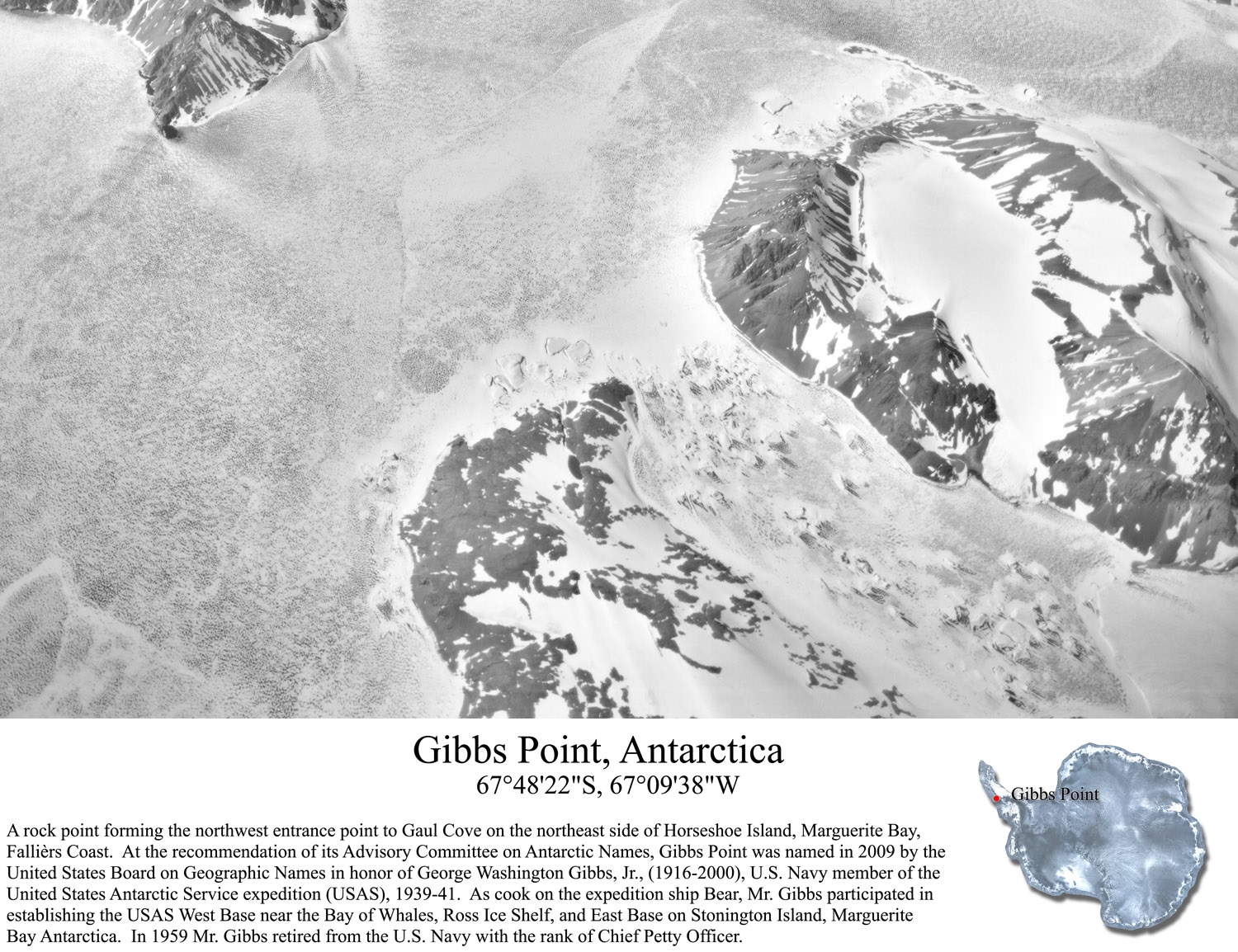
On September 2, the Advisory Committee on Antarctic Names (U.S. Board on Geographic Names) confirmed a place name in Antarctica for the first black explorer who set foot on the Frozen Continent. Gibbs Point is a rock point forming the northwest entrance to Gaul Cove, on the northeast of Horseshoe Island, Marguerite Bay, Antarctic Peninsula (67°48'22"S, 067°09'38"W).
This is Mr. Gibbs' second posthumous honor within a year. As a result of his civic and business leadership, the George W. Gibbs Jr. Elementary School was approved last year by the school board of Rochester, Minnesota; the school's formal dedication will take place on October 11. In 2002, Rochester's West Soldiers Field Drive was renamed in Gibbs' honor.
Gibbs was born on Nov. 7, 1916, in Jacksonville, Florida, and raised in that port city, afterward spending many years of his life connected to the sea. Enlisting in the U.S. Navy in Macon, Georgia, in 1935, four years later Gibbs was chosen from of hundreds of applicants to join an expedition with the United States Antarctic Service (U.S.A.S.).
In 1939, Congress established U.S.A.S, and an expedition under veteran polar explorer Admiral Richard E. Byrd went south, "to consolidate previous American exploration and to examine more closely the land in the Pacific sector." Serving as a Mess Attendant 1st Class aboard the lead expedition ship, U.S.S. Bear, Gibbs earned official praise from Lieutenant Commander Richard H. Cruzen, before the vessel ever departed American shores:
Especially commended by the Commanding Officer at meritorious mast for his zeal, initiative, and untiring industry, entailing much personal sacrifice, during the period the U.S.S. BEAR was outfitting and preparing for duty with the U.S. Antarctic Service.
On the morning of Jan. 14, 1940, the Bear steamed into the Bay of Whales, an indentation in the massive Ross Ice Shelf, that stetches out into the Ross Sea—it was a special day for Gibbs, who recorded the events in his journal:
When the Bear came up to the ice close enough for me to get ashore, I was the first man aboard the ship to set foot in [Byrd's old base] Little America, and help tie her lines deep into the snow. I met Admiral Byrd; he shook my hand and welcomed me to Little America and for being the first Negro to set foot in Little America.
The expedition then began carrying out a wide range of scientific studies, with Gibbs helping to establish West Base (Little America III), near the Bay of Whales, and East Base on Stonington Island, Marguerite Bay, Antarctic Peninsula. He also made two round trips between the United States and Antarctica on the Bear. However, due to rising international tensions, both bases were evacuated by March 1941. At this time, Gibbs was rated an Officer's Cook 3rd Class, again receiving recognition from the Bear's commanding officer, in May 1941:
Commended at meritorious mast for his outstanding zeal and energy, and for the unusual spirit of loyalty and cooperation which he has invariably displayed under trying conditions encountered during the assignment of this vessel to duty with the U.S. Antarctic Service.
Though he never returned to Antarctica, America's entry into World War II was just around the corner, and Gibbs saw much combat in the South Pacific during the conflict. This included service on the cruiser U.S.S. Atlanta, when she was wrecked by gunfire from the Japanese battleship Hiei, and a torpedo from the destroyer Akatsuki, forcing the Atlanta to be scuttled off Guadalcanal on Nov. 13, 1942.
Rising to become Chief Petty Officer Gibbs, he left the Navy in 1959, having earned the Navy Good Conduct Medal and the silver U.S. Antarctic Service Expedition Medal 1939-41, among other service medals. Gibbs moved to Minneapolis, where he graduated from the University of Minnesota with a Bachelor of Science in Education. Gibbs then moved to Rochester in 1963 to work with IBM in the personnel department. While at IBM, he received various promotions, including housing administrator and international assignment representative, before retiring in 1982.
Over many years, the Rochester community benefited from Gibbs' civil rights activism (including co-founding the local branch of the National Association for the Advancement of Colored People), as well as his civic and business leadership.
After his retirement from IBM, Gibbs started Technical Career Placement, Inc., and continued to operate the employment service until 1999. "He lived a long life of community service and never really retired," said his daughter Leilani Rashida Henry, who is currently researching for a book on her father's Antarctic adventures. "My father enjoyed life to the fullest and said that Antarctica was his best experience!"
On his 84th birthday, George W. Gibbs Jr. passed away of cancer on Nov. 7, 2000.

GW Gibbs Jr. onboard the USS Bear. (Courtesy Leilani Rashida Henry).
Gibbs Point, Antarctica.
Historic penguin sketches found
Penguin sketches made by Captain Scott and Ernest Shackleton have been found in a basement at Cambridge University. The legendary explorers drew the pictures on blackboards, probably for public lectures, in 1904 and 1909.
Nobody knows how the fragile images, in need of cleaning and restoration, ended up at the University's Scott Polar Research Institute.
Staff are appealing for donations to help preserve the signed chalk drawings and put them on public display.
Chalk and charm
"People often compare Scott and Shackleton in terms of their achievements as explorers and their leadership qualities," said Dr Huw Lewis-Jones, the historian and curator of art who found the images. "Now, albeit with a smile on our faces, we can judge their artistic abilities as well."
He said they were still trying to trace how the pictures arrived at the institute but he was sure they were authentic.
"Some people may think they look a little crude but I think they are incredibly charming," he added.
"They were drawn at public lectures in front of an enthusiastic audience, to laughter and to cheers, and then signed with a flourish.
"It's like having the explorers' autographs, only more wonderful, because each has signed their name next to a hand-drawn penguin."
Saved from obscurity
Scott made his drawing in 1904, after returning from his voyage aboard the Discovery. Shackleton, who also took part in the Discovery expedition, made his sketch five years later, after coming within 150km (90 miles) of the South Pole - the furthest south any group had been at the time.
"Because they are so special we want to make sure that they are preserved for the future," said Heather Lane, librarian and keeper at the Scott Polar Research Institute. "
We've managed to save these penguins from obscurity in the basement. Now we want to get them cleaned and restored so that visitors can enjoy them."
Source: BBC News 24, Friday 21 December 2007.
Old Diary Tells Tales of Scott Hardships
The James Caird Society Journal
"The first issue of our journal is planned to appear in time for our next meeting at Dulwich College on May 9th. The editor is Dr Jan Piggott, Keeper of the Archives at Dulwich College, a member of our Committee and the curator of the exhibition at Dulwich of 2000-01, 'Shackleton: the Antarctic and Endurance.'
(19 April 2003)
Dr. J.R. Piggott
The Common Room
Dulwich College
London SE21 7LD
Scott Polar Research Institute Launches Appeal
--R. Stephenson
(16 December 2001)
Cover Letter from The Director
Our aim is to provide access via information technology to all of the Institute's resources, and to extend its outreach both globally and to a much wider public than is currently feasible. Each of these projects will require just over £1m to provide its material needs, and, importantly, its sustained development by expert staff.
Much of the text from the Appeal packet
WHO WILL GAIN FROM THIS?
WHY SHOULD WE BE INTERESTED IN THE POLAR REGIONS?
WHAT CONTRIBUTION CAN THE INSTITUTE MAKE?
HOW CAN YOU HELP?
(I) THE ARCHIVE PROJECT.
(II) THE LIBRARY PROJECT.
(III) THE MUSEUM PROJECT.
These Projects all demand long-term concentration on evolving technologies for improving access and presentation of all the material acquired by the Library, Archives and Museum. Sustainability of the Projects requires dedicated, specialist personnel, and it is to ensure this that your support is being sought.
THE SCOTT POLAR RESEARCH INSTITUTE
A UNIVERSITY INSTITUTE WITH AN INTERNATIONAL MISSION
If you are interested in making a donation to the Appeal, information about how to do this is provided on a loose leaf insert in this brochure. Alternatively, you may wish to contact either:
Mr W. J. Mills, The Librarian and Keeper of Collections
Scott Polar Research Institute
Lensfield Road
Cambridge CB2 1ER
UK
Cambridge in America
Checks should be made payable to 'Cambridge in America' and donors should request that the funds be applied to the Scott Polar Research Institute Fund.
309 West 49th Street
New York, NY 10019-7399
Sir Hubert Wilkins' Birthplace Restored
RECOGNISING OUR NATIONAL HERO
And another excerpt from the July 2001 issue:
SIR HUBERT'S LIFE CELEBRATED
Wilkins' birthplace is at Mt Bryan East near Hallett, South Australia. Hallett is 185km north of Adelaide.
Another website with information on Wilkins is at www.rbe.net.au/~goyder/tourism_sir_hubert.htm
Antarctic Tartan
It is the Antarctic Tartan.
Background notes
The symbolism of the Antarctic Tartan explained. The colours: White represents the ice-covered continent, ice floes, and the edge of the Antarctic Ocean. Grey represents outcropping rocks, seals and birds. Orange represent lichen, Emperor and King penguin (head) plumage. Yellow also represents penguin plumage and the summer midnight sun. Black and white together depict penguins and whales. Pale blue represents crevasses in the ice and shallow blue icy waters of the ice shelves, whilst dark midnight blue represents the deep Antarctic Ocean and the darkness of Antarctic winter.
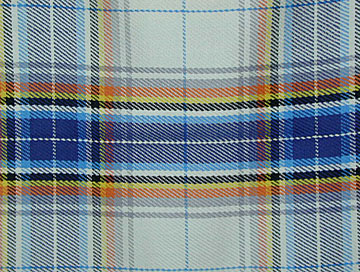
The Antarctic Tartan
Antarctic Virtual Museum
Discovery Dentistry
Original South Pole Pole
Spencer-Smith's Wallet Found
Pierre Dumoutier, Antarctica's First Cranioscopist
First Fish caught below the Antarctic Circle
Fourth Generation Antarcticans
First Penguin Mention
First Antarctic Surgery
Entertainment, however, sometimes became almost a "Roman holiday", and when Royds was operated upon for a cyst on his cheek, the general reaction was one of pleasurable interest rather than sympathy for the unfortunate victim. Dr. Koettlitz, nothing loath to perform the first operation in Antarctica, gladly prepared for the event. The wardroom table became the operating table. I volunteered as nurse, and rolled up my sleeves to play the part convincingly, while Koettlitz brought from their hiding-places a formidable array of knives, pincers, scissors, lint, gauze and bandages, explaining ghoulishly the exact function of each. Armitage took charge of the phial of patent freezing mixture, and the rest of the wardroom gathered round. The effort at first was not a success, for the freezing mixture functioned so thoroughly that the knife would not penetrate the skin, and while we waited for it to thaw a little, all joined in terrifyingly reassuring remarks to the patient. Again the knife was applied, and this time, to our intense satisfaction, blood flowed. Our questions as to whether it hurt or not brought a most emphatic "Yes". But the cyst was removed and the cheek stitched up, and Royds was distinguished for the rest of his life by a diminutive scar, a record of the first surgical operation performed in Antarctica.
HOME